
Airflow That Reaches Every Room Properly
Ductwork in West Chester for homes with uneven temperatures and weak airflow despite functioning HVAC equipment
West Chester's housing stock spans construction periods from older homes with retrofit ductwork to newer builds with modern distribution systems, and each configuration affects how conditioned air reaches living spaces. Damaged ducts, poor layout, and disconnected sections create comfort problems that heating and cooling equipment cannot overcome—rooms remain too warm or cold regardless of thermostat settings, airflow from certain vents feels weak or nonexistent, and system runtime increases without improving comfort. Home HVAC Services evaluates ductwork as part of the complete HVAC system rather than an isolated component, identifying where air distribution fails and what modifications restore balanced airflow throughout the home.
Ductwork assessment examines visible sections in basements, attics, and crawlspaces to locate damage, verify connections, and evaluate whether duct sizing and layout support proper air distribution. Problems surface as disconnected flex duct, crushed sections that restrict airflow, undersized ducts that cannot carry sufficient volume, and leaks at seams where conditioned air escapes before reaching intended rooms.
Request a ductwork assessment when temperature inconsistencies persist despite HVAC equipment that operates without obvious problems.
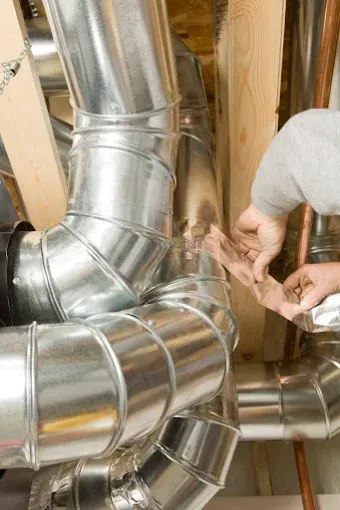
How Duct Performance Affects Home Comfort
Ductwork functions as the delivery network for heated and cooled air produced by furnaces and air conditioners, and any compromise in that network reduces comfort and efficiency. Leaks in attic ducts allow conditioned air to escape into unconditioned spaces, crushed or kinked flex duct restricts volume to specific rooms, and improperly sized duct sections create pressure imbalances that leave some areas starved for airflow. Home HVAC Services addresses these issues by repairing damaged sections, reconfiguring problematic layouts, and ensuring ducts integrate properly with heating and cooling equipment capacity.
After ductwork corrections, rooms that previously stayed uncomfortably warm or cold reach temperatures consistent with the rest of the home, airflow from vents increases to noticeable levels, and HVAC equipment cycles less frequently because conditioned air reaches living spaces instead of leaking into unconditioned areas. The system maintains temperature more predictably without the extended runtimes caused by poor air distribution.
Ductwork evaluation identifies whether comfort problems stem from distribution issues or equipment performance, which prevents unnecessary furnace or air conditioner replacement when the actual issue involves how air moves through the home. Assessment includes measuring airflow at vents, inspecting accessible duct sections, and testing system pressures to determine where distribution fails.
Common Questions About Ductwork
Ductwork questions typically focus on how distribution problems develop and what repairs accomplish for overall comfort.
What causes uneven temperatures when HVAC equipment operates normally?
Disconnected or leaking ducts allow conditioned air to escape before reaching certain rooms, undersized duct sections restrict airflow to specific areas, and poorly designed layouts create pressure imbalances that favor some rooms over others regardless of equipment output.
How does ductwork connect to heating and cooling performance?
Even perfectly functioning furnaces and air conditioners cannot compensate for ducts that leak 20-30% of conditioned air into attics or crawlspaces, restrict airflow due to damage, or fail to distribute air proportionally across living spaces.
What changes after ductwork repairs?
Previously uncomfortable rooms reach the same temperature as the rest of the home, weak airflow from vents increases to normal volume, system runtimes decrease because less conditioned air escapes before reaching living spaces, and temperature consistency improves across all areas.
When should West Chester homeowners evaluate ductwork?
Persistent hot or cold rooms despite thermostat adjustments, visible duct damage in basements or attics, dusty air from vents indicating leaks pulling in unconditioned air, and HVAC equipment that runs constantly without maintaining comfort all suggest duct problems worth investigating.
What ductwork problems require professional assessment?
Sealed ducts in finished ceilings or walls that cannot be visually inspected, airflow imbalances requiring pressure testing and system evaluation, and layout issues that need proper sizing calculations all benefit from professional ductwork assessment rather than guesswork.
Home HVAC Services treats ductwork as integral to heating and cooling system performance, evaluating air distribution alongside equipment operation to identify where comfort problems originate. Arrange an assessment when temperature inconsistencies suggest airflow rather than equipment issues.